
Last updated November 15, 2026
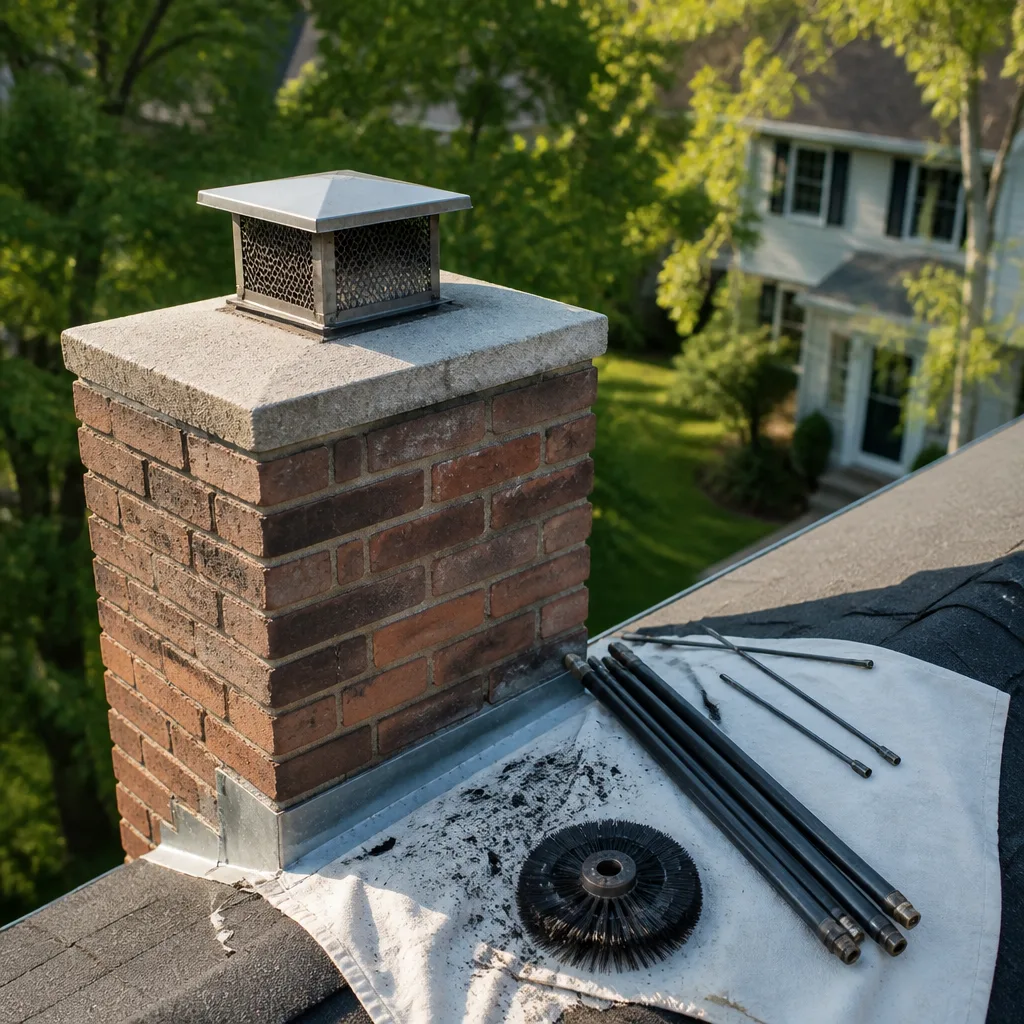 Sweep & inspection
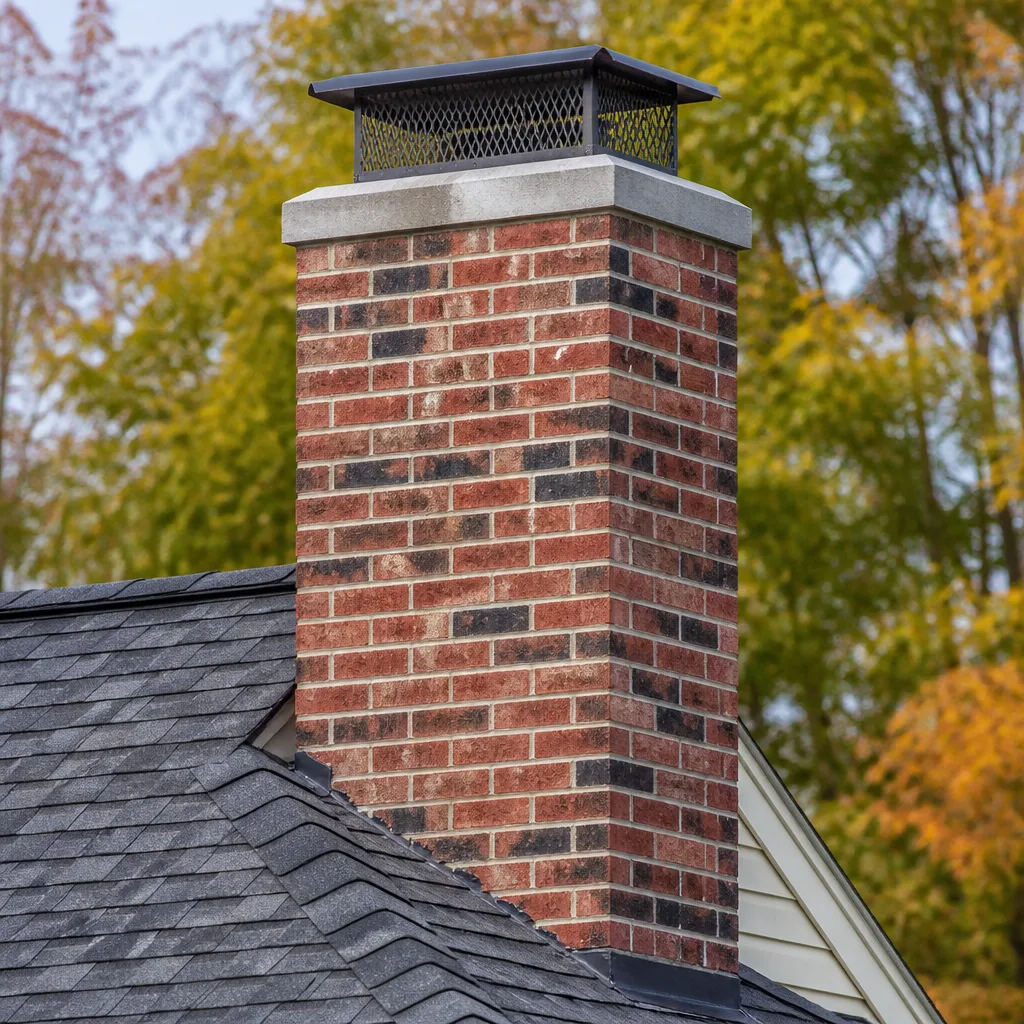 Caps & crowns
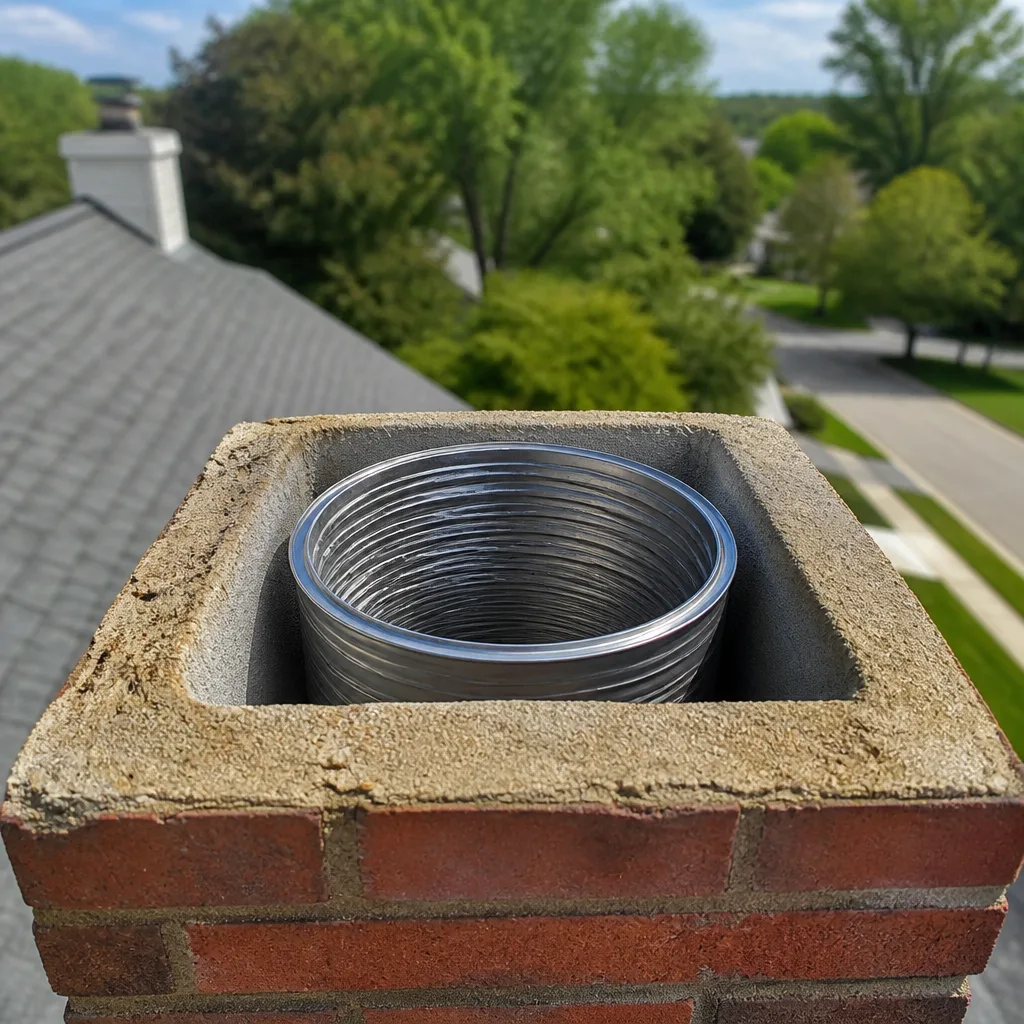 Flue relining
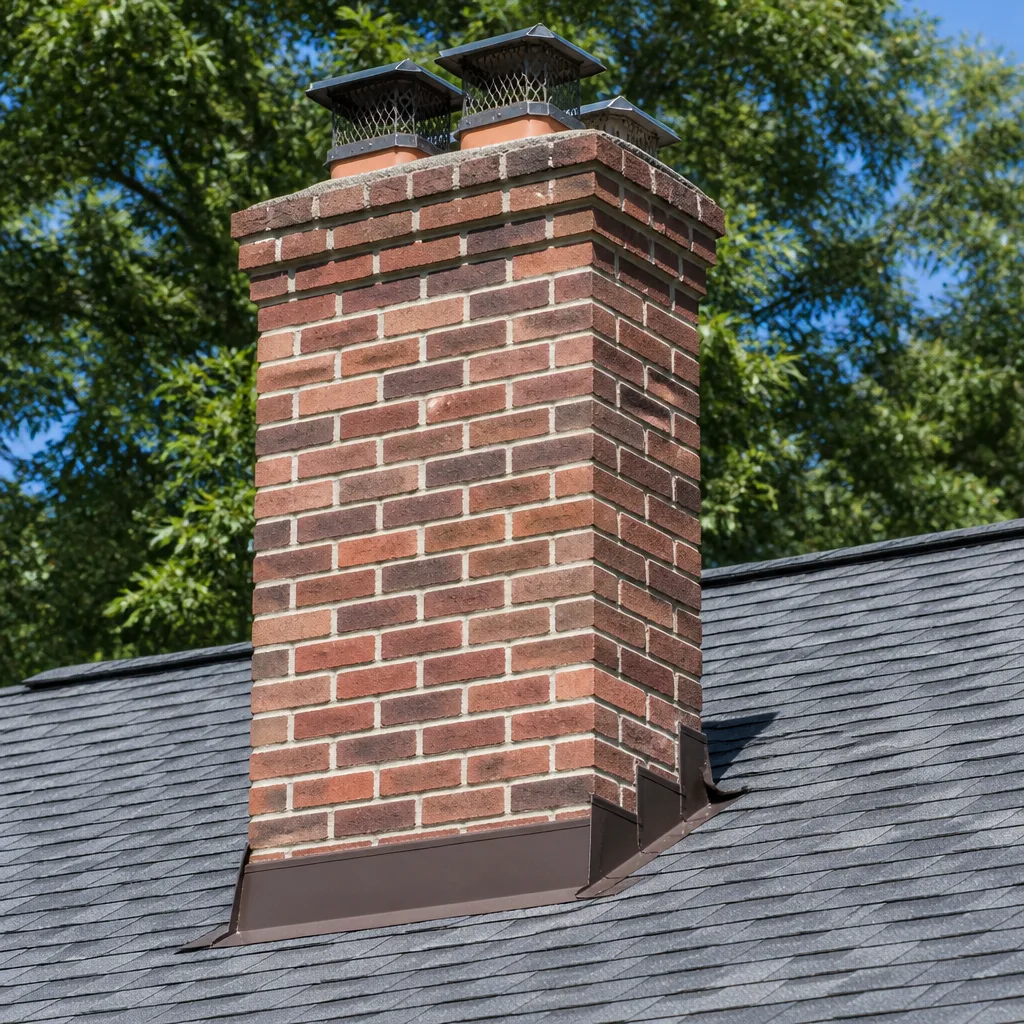 Masonry repair
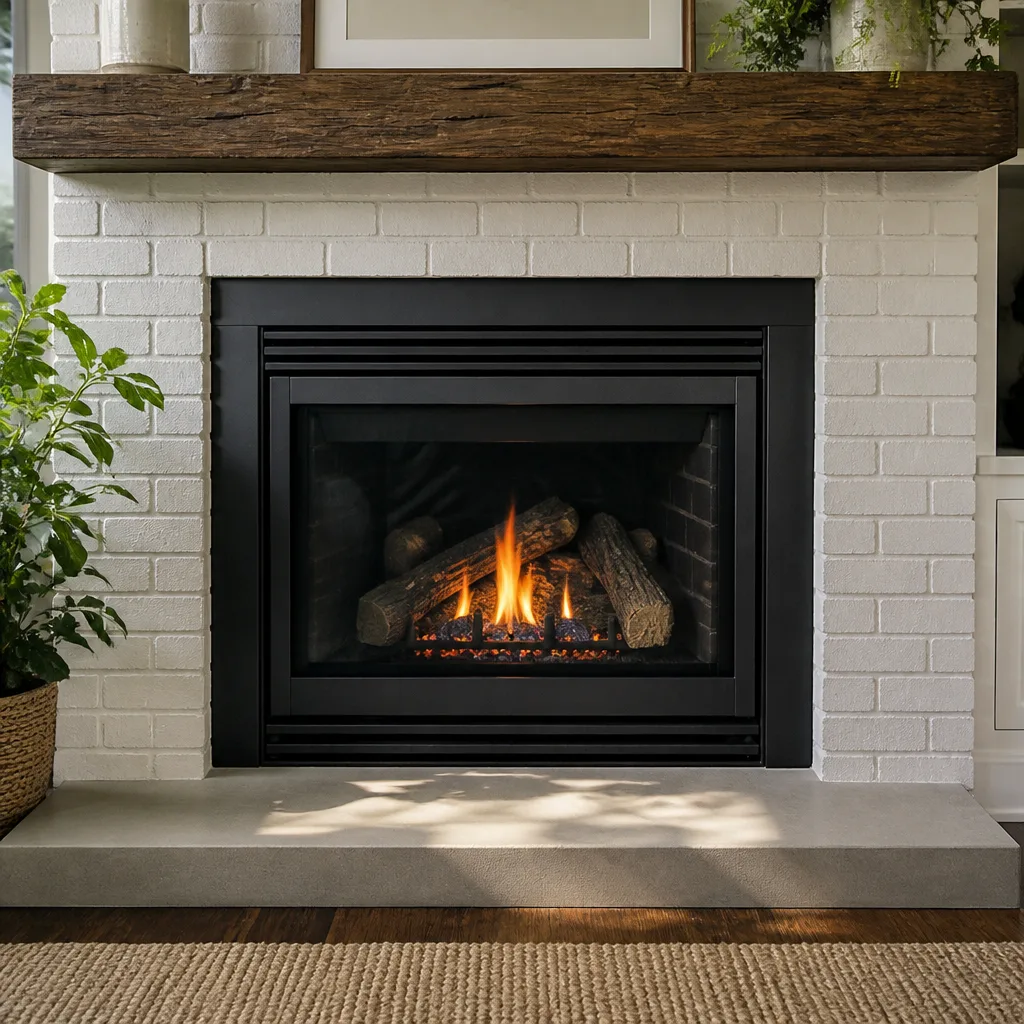 Gas fireplace service
Level 1 sweep and inspection to the NFPA 211 annual standard - flue, crown, cap, and flashing checked and photographed
Chimney sweep logs do not sweep chimneys. They loosen some creosote - which then falls where a brush and vacuum still have to collect it.
Choosing the Right Chimney Cleaning Brand: A Buyer’s Guide for Sunrise Manor
The chimney cap on the shelf at a big-box store and the one a chimney professional installs can look identical from the ground. Both are metal, both are round or square, both keep rain out. The difference lives in the steel gauge, the mesh specification, and whether the assembly will still be square after a Sunrise Manor summer of 100-plus degree days and monsoon wind. Most homeowners never see that difference until three winters later, when a warped cap lets water into the flue and the repair bill is larger than the cap ever was. This guide covers what actually separates professional-grade chimney products from retail versions: caps, creosote treatments, liner systems, and the everyday items that help or hurt between cleanings. You’ll learn how to read a contractor’s material choices as a signal of their technical standards, and how to tell a product that performs from one that just looks the part.
Quick Answer
The right chimney cleaning products for a Sunrise Manor home are professional-grade components selected to match your flue type and venting setup: a properly gauged stainless cap, a liner system sized and rated for your appliance, and creosote treatments that work chemically rather than cosmetically. Brand names only matter when you understand what each product actually does, which is why the specification (material, gauge, rating, application method) tells you more than the label. A contractor who can explain those specifications is the one worth hiring.
Styles & brands we work with
- Sweep & inspection
- Caps & crowns
- Flue relining
- Masonry repair
- Gas fireplace service
Table of Contents
- Why Brand Selection Matters More Than Most Homeowners Realize
- Chimney Caps: Professional-Grade vs. Consumer-Grade, by Material and Gauge
- Creosote Removal: ACS-Rated Chemical Treatments vs. Retail Sweeping Logs
- Liner Repair Systems: Flexible Stainless vs. Poured Liner
- How to Read a Contractor’s Material Choices
- Products That Help Between Professional Visits, and Ones That Don’t
- Sunrise Manor Specifics: Heat, Monsoon Wind, and Older Masonry Flues
- When to Call a Professional
Why Brand Selection Matters More Than Most Homeowners Realize
Chimney work is one of the few trades where the product is often hidden from the person paying for it. A liner sits inside a masonry flue where no one sees it again. A cap goes on a roof and gets inspected from the ground at best. Because the components disappear, the temptation to save money on materials is strong, and the consequences of doing so are delayed by years.
Professional-grade chimney products are built to a different specification than their retail counterparts. That’s not marketing language; it’s measurable. A professional cap uses a heavier stainless gauge and a tighter mesh count so it resists warping from heat and wind. A liner system carries a listing for the appliance it serves and the fuel type it handles. A creosote treatment carries an actual chemical rating for how it interacts with the deposits inside a flue.
In our experience across Sunrise Manor, the failures we see most often trace back not to a botched installation, but to a component that was never built for this climate or for the appliance it was attached to. A cap rated for a coastal environment does not perform the same way in a desert valley that swings from hard freeze to triple digits. Getting the material right at the start is cheaper than correcting it later.
The practical upshot: when you evaluate a chimney contractor, you’re also evaluating their supply choices. A firm that works from professional-grade lines (the kind used by trained specialists rather than picked off a hardware shelf) is signaling that it treats your flue as a system, not a task. That’s the standard we hold ourselves to as Paragon Chimney Sweep, and it’s the standard you should ask about before you book anyone.
Chimney Caps: Professional-Grade vs. Consumer-Grade, by Material and Gauge
A chimney cap does three jobs: it keeps rain and animals out, it sparks-arrests (on solid-fuel flues), and it defends the flue crown and masonry from water intrusion. A cheap cap does the first job poorly and the other two not at all. Here’s what separates the two tiers.
Material
- Consumer grade: often galvanized steel, sometimes thin aluminum. Galvanized steel corrodes from the inside out and the coating chalks off under sun exposure. Aluminum is lighter and can bend under a ladder or a branch.
- Professional grade: stainless steel (typically 304 or 316 alloy) or copper. Stainless holds up to heat cycling and consistent sun; copper is heavier and develops a stable patina instead of rusting through.
Gauge
- Gate to know: lower gauge number = thicker steel. A 24-gauge cap is meaningfully heavier than a 30-gauge cap even though the price difference looks small on paper.
- What to ask: “What gauge stainless is the cap body, and what gauge is the mesh?” If the contractor can’t answer without checking, treat that as a data point.
Mesh Specification
- Standard: 3/4-inch mesh is the common smoke-and-animal shield for wood-burning fireplaces; 5/8-inch and 1/2-inch are tighter and better for spark arrest and small-critter exclusion but restrict draft more.
- Matching matters: too-tight mesh on a masonry fireplace can reduce draft enough to cause smoke spillage; too-loose mesh lets birds and squirrels in. The right mesh depends on what you’re burning and where the flue terminates. This is where a chimney sweep evaluation beats a shelf purchase.
The practical field test: compare the mesh between two caps. If the retail mesh bends under thumb pressure and the professional mesh doesn’t, you’ve found the difference in one motion. The second test is the weld at the crown of the cap. A spot-welded retail cap will flex; a welded professional cap holds a shape.
Creosote Removal: ACS-Rated Chemical Treatments vs. Retail Sweeping Logs
Creosote is the whole reason chimney cleaning exists. It’s the tarry, flammable residue that accumulates as smoke cools on the flue walls, and it comes in three stages: light soot (easy to brush), medium flaky creosote (brushable but stubborn), and glazed creosote (hard, shiny, and genuinely hazardous because it re-ignites easily). The right product depends entirely on which stage you have, which is why a visual inspection comes first.
How ACS-rated chemical treatments work
ACS (Association of Chimney Sweeps) rated treatments are formulated to change the creosote chemically, not just physically. Most work by one of two mechanisms: they react with the tarry deposit to make it more brittle, so it brushes off easily, or they soak in and dry the glazed layer so it can be removed with a brush instead of a controlled burn. These treatments aren’t a substitute for a professional sweep; they make a professional sweep possible on deposits that would otherwise resist mechanical removal.
What retail “sweeping logs” actually do
A chimney sweeping log is a salt-based product you burn in your fireplace. The claim is that the salts loosen creosote as they pass up the flue. What actually happens is more modest: the log can dry out light to medium creosote deposits so some of it flakes off. On glazed or heavy creosote, it does very little. And a “loosened” deposit still sitting on the flue wall is not clean; it’s just in a different condition.
Here’s the point most product pages skip: a sweeping log can give a false sense of security. You burn one, the flue looks a little lighter, and you skip a sweep. In a Sunrise Manor wood-burning household that burns through the cooler months, that’s the wrong call. If you want to know what condition your flue is actually in, a real visual assessment is the only honest answer.
Liner Repair Systems: Flexible Stainless vs. Poured Liner
When a clay tile liner cracks, spalls, or was never correctly sized for the appliance, you’re looking at one of the most expensive decisions in chimney work: reline or rebuild. Getting the material right here matters more than anywhere else in this guide.
Flexible stainless liner (DuraFlex and similar)
A flexible stainless liner runs a new stainless steel conduit inside the existing flue. It’s the right choice for:
- Prefabricated chimneys with a failed original liner.
- Masonry flues being converted to a gas or wood insert, where the new appliance needs a correctly sized flue.
- Offset or out-of-line flues where rigid pipe won’t make the turn.
- Flues with a major structural failure where resurfacing alone won’t restore integrity.
DuraFlex flexible liner systems are a professional-grade option we regularly spec, because they come in the sizes and fittings to match most residential appliances without shop-fabrication guesswork.
Poured liner / cast-in-place (HeatShield)
A poured liner restores the flue from the inside out. HeatShield is a proprietary restoration system that resurfaces a cracked or spalled flue with a castable ceramic-like material formed to the original flue shape. It’s the right choice for:
- Older masonry chimneys where the flue is basically sound but the tile joints and surfaces are failing.
- Homes where demolition and rebuild would be a major structural and cost event, and the homeowner wants to avoid it.
- Flues that need to stay in service without removing the original tile.
“Restore, don’t replace” is the guiding logic. HeatShield isn’t a patch; it’s an actual resurfacing of the flue’s working surface. But it also isn’t right for every flue, and any contractor who says “HeatShield fixes everything” is telling you something about their range.
How to decide
Two things must line up: the appliance sizing and the flue geometry. A flexible stainless liner is correct when the flue needs a new lined interior. A poured liner is correct when the flue interior is failing but the structure is worth saving. The decision should follow a camera inspection, not a price tag. Ask for the photo evidence, and ask why that material rather than the other.
How to Read a Contractor’s Material Choices
You don’t need to know the brand of every product in the trade. You need to know how to read which brands a contractor uses, and what that says about the standards they hold. Here’s a simple framework.
- Ask for the brand and the spec, not just the category. “Stainless cap” is a category. “Stainless cap, 304 alloy, 24 gauge, 3/4-inch mesh” is a spec. A contractor who automatically talks spec is talking from practice, not a sales sheet.
- Ask how they select between two valid options. Flexible stainless vs. poured liner is the classic example. A specialist will ask what appliance is on the flue, what shape the flue is in, and what the inspection showed, then recommend. A generalist will recommend whichever they happen to stock.
- Notice whether the brand list is curated or generic. A firm that works with professional-grade lines like dryer vent cleaning-safe brands, HeatShield, DuraFlex, Gelco, Famco, Copperfield, and Olympia Chimney is choosing from a defined portfolio rather than buying the cheapest unbranded version available.
- Check whether they do the repair or hand it off. A firm that only sweeps and subcontracts out repair work has no accountability for whether the repair holds. A firm that diagnoses and repairs in the same visit does.
This is what “the Paragon standard” means in practice: the technician who sweeps your flue is the technician who can quote the repair, and the repair materials come from a stable, professional-grade supply chain. No handoffs. No second contractor in your home. No “we don’t do that, call the liner guy.”
One caveat: ask any contractor who says they use Gelco, Famco, Olympia Chimney, or similar lines which product specifically, and why. Anyone genuinely trained in those lines can answer in a sentence. Anyone bluffing can’t.
Products That Help Between Professional Visits, and Ones That Don’t
Homeowner-level chimney maintenance is limited, but it’s not zero. Here’s an honest split between what’s genuinely useful and what creates false confidence.
Genuinely useful
- A proper thermometer or stovetop gauge. Burning at the right temperature dramatically reduces creosote accumulation. This is the single best maintenance product you can own.
- Seasoned, dry firewood. Not a “product” in the retail sense, but it’s the highest-leverage thing in your fireplace. Wood under 20% moisture burns cleanly; green or wet wood produces far more creosote.
- A correctly sized cap and spark arrestor. On the roof, this is the maintenance product that actually protects the flue from water and animals, which are two of the biggest causes of accelerated liner decay.
- A quality brush set for the homeowner who wants to knock loose soot off between professional sweeps. Fine for a light touch, not a substitute for the real clean.
- Carbon monoxide and smoke detectors maintained on the manufacturer’s schedule. This is not a chimney product, but it’s the backstop for every chimney product.
False confidence
- Sweeping logs as a substitute for a professional sweep. Covered above. They can loosen deposits without removing them.
- Spray-on creosote removers marketed as “cleaning” treatments. Some work as part of a professional process; none replace the process.
- “Chimney cleaning” from below with a vacuum and a hand brush. A brush from the firebox can clean the accessible flue but doesn’t reach the upper portions from the correct angle, and it doesn’t inspect.
- Caps marketed as “universal fit” that don’t match your flue shape or band correctly. A loose-fitting cap can be worse than no cap because it blocks draft while letting water pool.
If you remember one thing from this section: the best “product” for chimney maintenance is a scheduled professional inspection with photo documentation. Everything else is support, not substitution.
Sunrise Manor Specifics: Heat, Monsoon Wind, and Older Masonry Flues
Sunrise Manor isn’t a generic market. It’s a specific one, and the products that perform here are not identical to products that perform in a humid coastal market or a cold-climate market.
Summer heat
Sunrise Manor summers hit high triple digits repeatedly, and the sustained dry heat cycles cap metals and exposed masonry in a way many cap manufacturers don’t design for. Stainless holds heat well; galvanized coatings dry out and chalk. A cap that looks fine in a milder climate can warp or loosen its mesh here within a few seasons. Copper also holds up, though it costs more, and its patina is a function of sun and dry air rather than moisture. This is why gauge matters more here than in a cooler place: a 30-gauge cap that survives a Seattle winter may not survive the swing.
Monsoon wind and dust
The late-summer monsoon months bring wind-driven dust and hard rain bursts. That combination loads up mesh with grit and tests whether a cap was actually banded to the flue or just set on top. A cap that shifts by a fraction of an inch over a season eventually leaves a gap, and once a gap opens, water wicks into the crown and flue tile. Anchoring matters as much as gauge.
Older masonry flues
Much of Sunrise Manor’s housing stock was built when clay tile was standard and appliance sizing was more forgiving. A lot of those flues are now serving appliances they weren’t sized for, or have developed spalling clay from years of thermal cycling. That’s the population where HeatShield restoration is often the technically correct answer instead of a full rebuild: the structure is fine, the liner surface isn’t. Contrast that with a prefabricated chimney of more recent build, where a flexible stainless reline is usually the right call. Knowing which category your home falls into before you call saves you the awkward conversation on the roof.
The climate doesn’t create new chimney problems, but it accelerates the ones you already have. If you want a local read on your specific flue, a chimney contractor with an established presence in Sunrise Manor can tell you in five minutes whether you’re looking at a light clean or a real repair.
Common Mistakes to Avoid
- Buying a cap by diameter alone. Matching only the flue diameter and ignoring flue shape, cap height above the crown, and mesh spec produces a cap that fits but doesn’t protect. A chimney sweep measures flue shape and appliance before specifying a cap.
- Substituting a sweeping log for a professional clean. A log can loosen light creosote, but it doesn’t remove it, and it doesn’t tell you whether the deposit is glazed. Book the sweep, then consider the log only after the flue is actually clean.
- Accepting “HeatShield can fix everything” as an answer. HeatShield restoration is a genuine alternative to rebuild in the right cases, but it’s not the right material for every flue. A contractor who reaches for it automatically without measuring the flue geometry is not doing the design work.
- Choosing flexible stainless as a universal liner answer. Flexible stainless is a professional-grade solution, but it’s not always the correct one. On some older masonry flues, poured liner restoration is a better long-term answer and does not remove the existing tile.
- Not asking for camera evidence. A written recommendation without a photo or camera inspection is a recommendation you can’t verify. Whatever the trade, “trust me” is not evidence. Ask to see the images.
- Skipping the dryer vent alongside the chimney. In a Sunrise Manor home, dryer vent lint buildup shares the same fire-safety category as creosote buildup. One visit that handles both eliminates a second scheduling headache and a second exposure.
- Assuming the cheapest quote is the same job. A low quote is often a low-grade cap, a light clean, or an inspection that wouldn’t catch a failed liner. The price difference in a quote often maps to the materials, not to a discount.
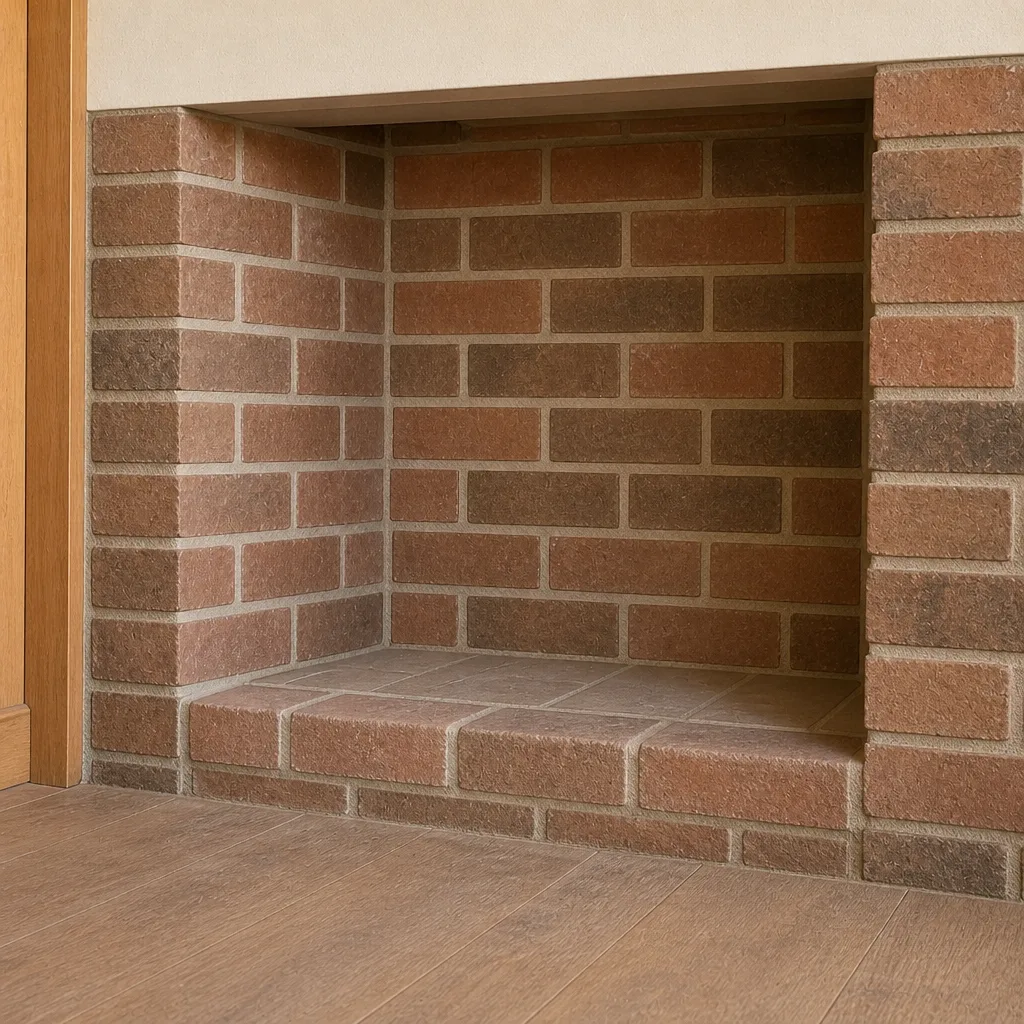
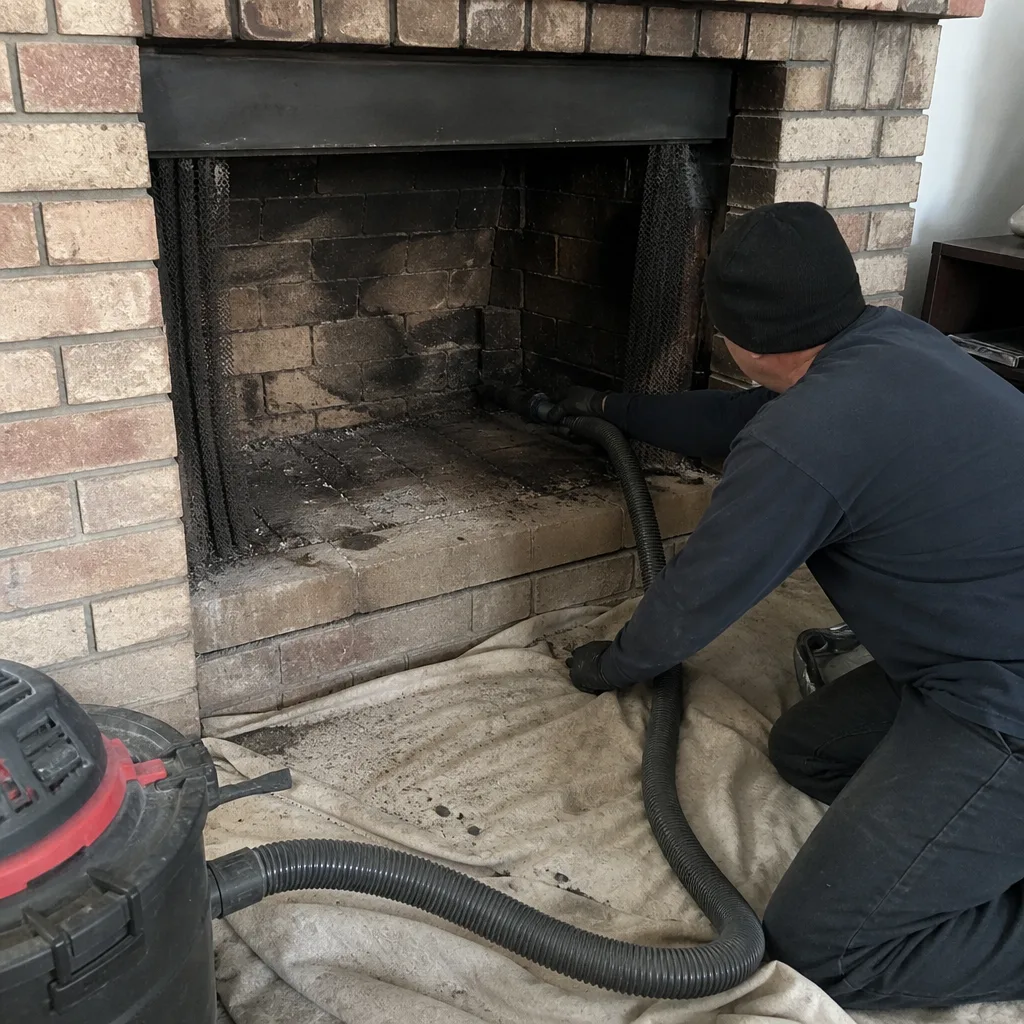
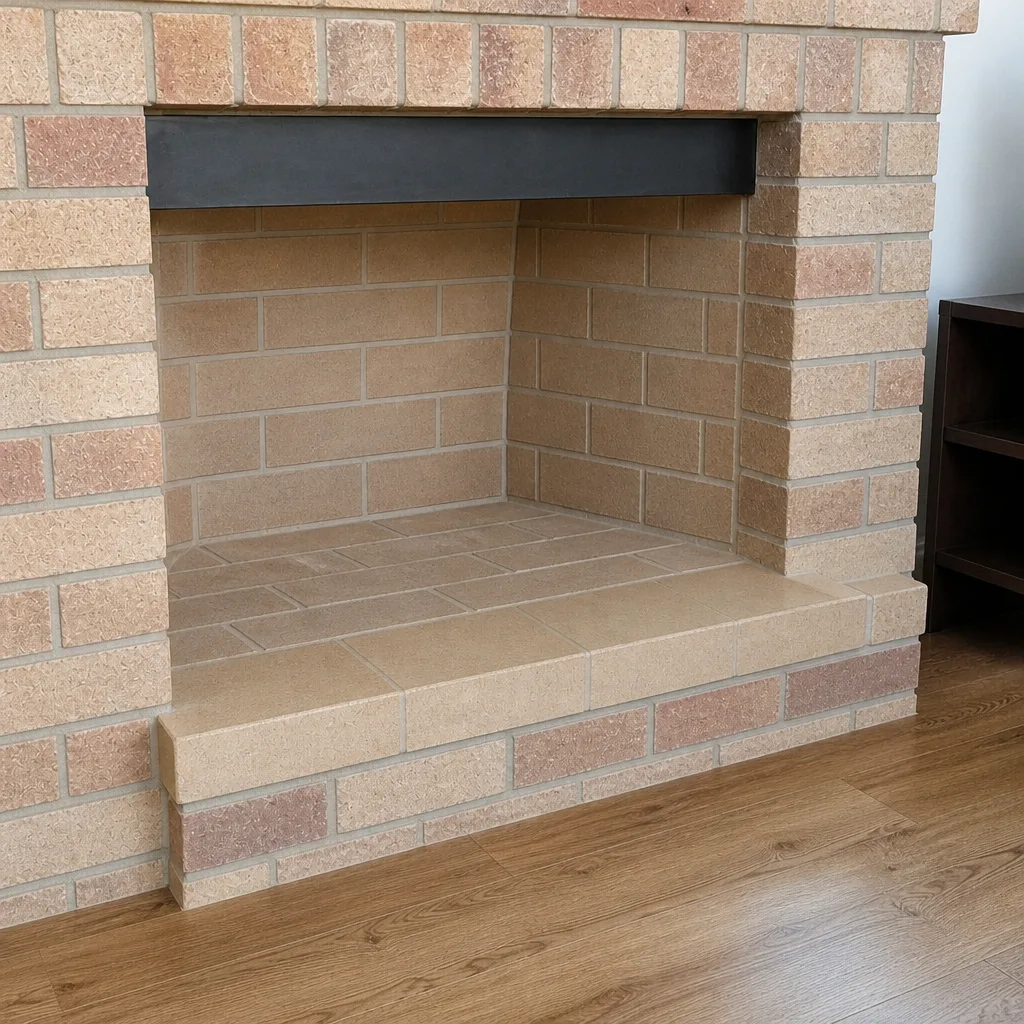
See the difference
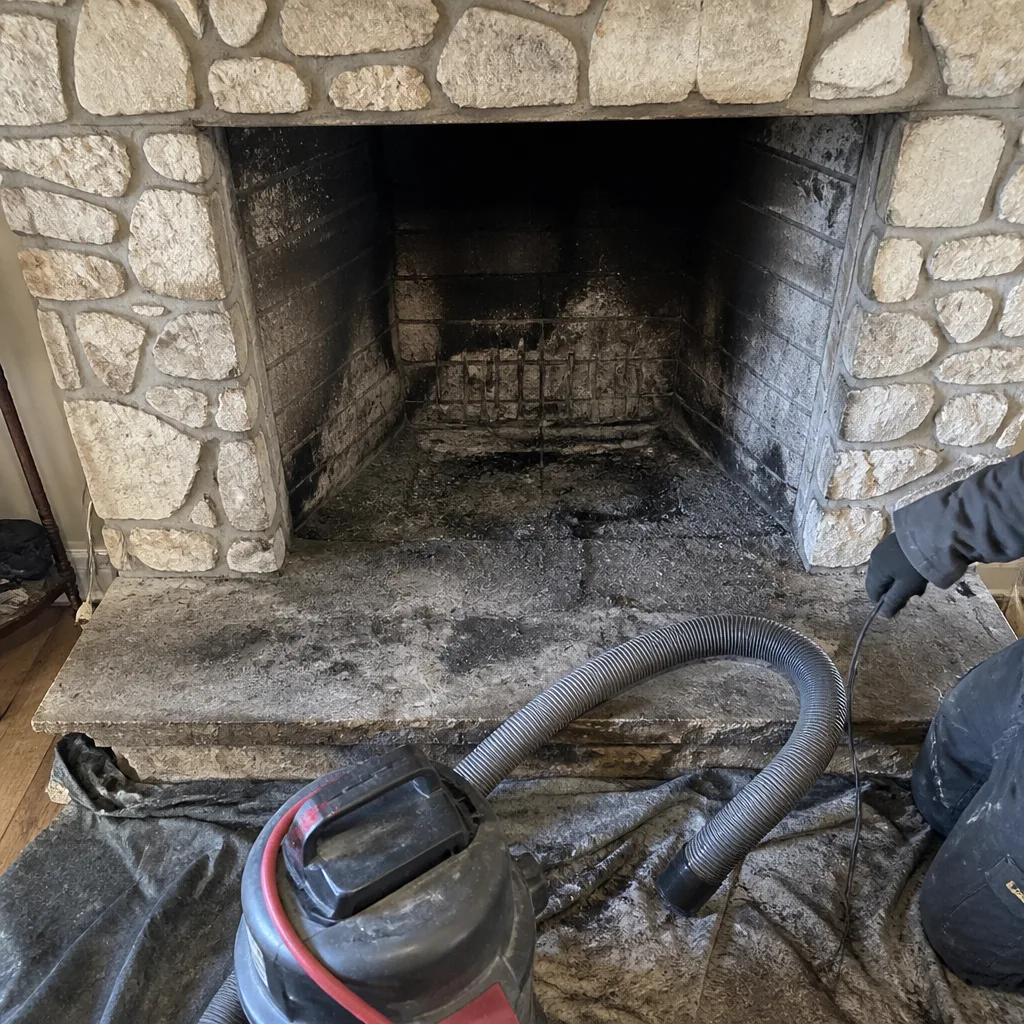 Before
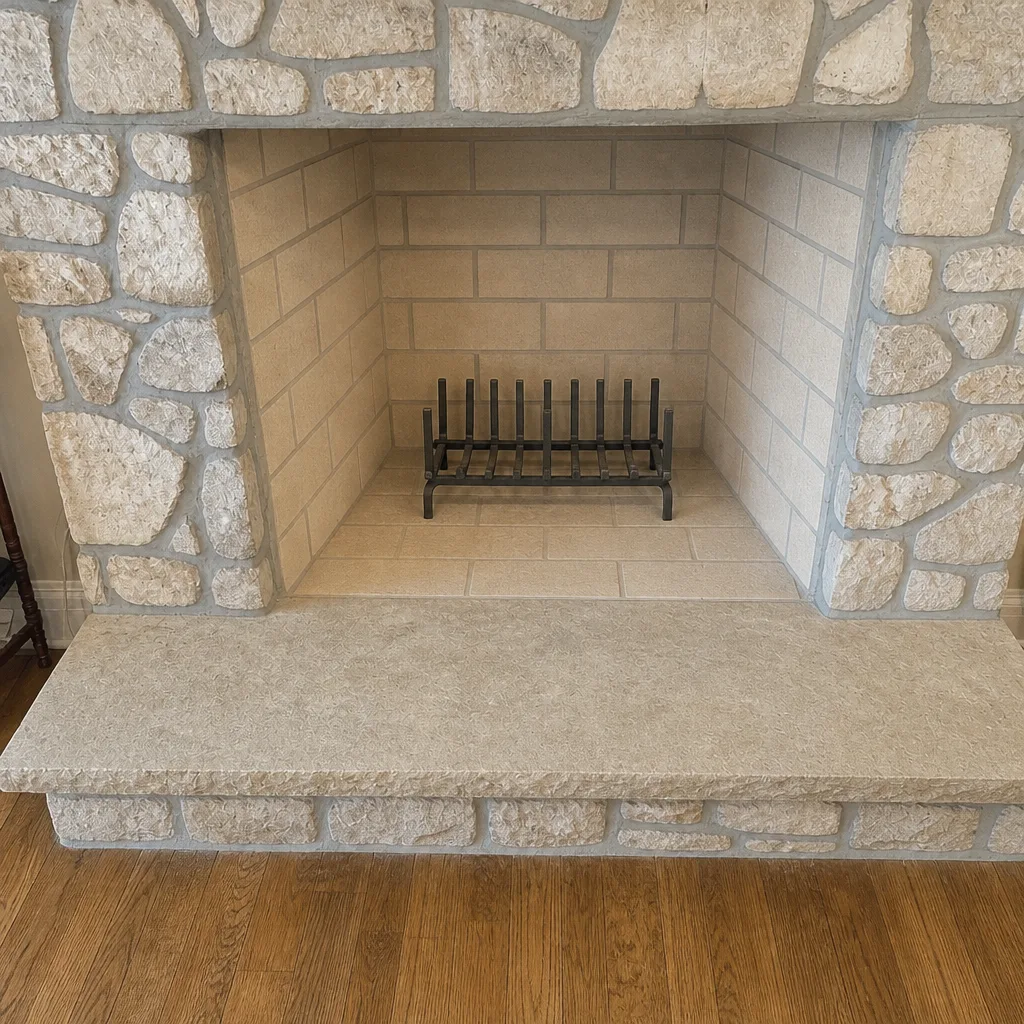 After
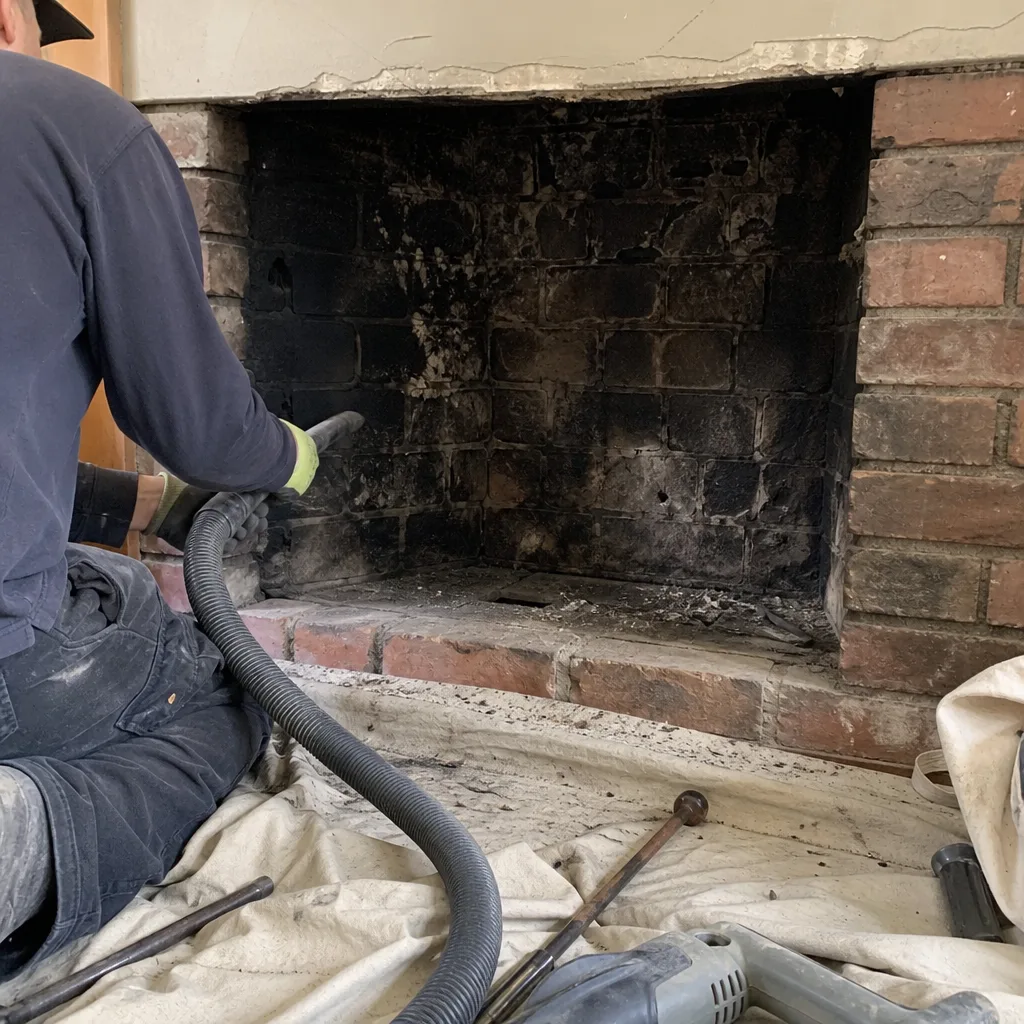 Before
 After
 Before
 After
When to Call a Professional
Chimney work is one of the trades where “I’ll get to it later” has a real cost. Call a professional when you’ve moved into a home with a fireplace and don’t know the last sweep date. Call when you’ve burned a season of fires and haven’t had the flue inspected since. Call when you’ve noticed smoke backing up into a room, a cap that’s visibly tilted or missing, or a chimney crown with cracks. Call if a gas appliance or wood insert was added without a liner upgrade. Call after a large storm that brought wind-driven rain or debris. And call before the first burn of the season, every year; the creosote your flue accumulates over the summer is invisible from the firebox.
Paragon Chimney Sweep offers free estimates in Sunrise Manor. Our technicians have up to 14 years of experience, and we sweep, repair, and clean dryer vents with one team. Call (833) 486-5098. We answer 24/7. Fast dispatch from 7am to 7pm, Sunday through Friday.
Frequently Asked Questions
The “best” brand depends on the component and the appliance, but professional-grade lines worth asking about include HeatShield for cast-in-place flue restoration, DuraFlex for flexible stainless relining, and Gelco, Famco, Copperfield, and Olympia Chimney for caps and accessories. These are the same lines certified chimney specialists work from, not generic hardware-store substitutions. The right question isn’t “which brand” but “which specification fits my flue and appliance.” Call (833) 486-5098 for a specific recommendation based on your setup.
Often, yes. The main differences are steel gauge, mesh specification, and how the cap anchors to the flue. A 24-gauge stainless cap with a properly sized mesh and a banded anchor holds its shape and protects the crown; a 30-gauge galvanized cap with a loose fit can warp or gap within a few seasons in Sunrise Manor heat. Look at the weld at the crown of the cap and the thickness of the mesh. If either flexes under a thumb, it’s the lighter tier. Call (833) 486-5098 to have a cap spec’d to your flue.
No. Sweeping logs can loosen light to medium creosote deposits, but they don’t remove the deposit from the flue, and they do very little on glazed creosote. They can produce a misleading visual result that suggests the flue is cleaner than it is. A professional sweep mechanically removes the deposit and can inspect what’s underneath. Call (833) 486-5098 to book a sweep and skip the log.
HeatShield is the right choice when the flue is structurally sound but the clay tile has cracked or spalled and needs a new working surface – typically older masonry chimneys where a full rebuild is disproportionate. Flexible stainless like DuraFlex is the right choice when the flue needs a new lined conduit (often with a prefabricated chimney or an appliance change) or has a failure that resurfacing alone can’t correct. The inspection tells you which case you’re in; the brand doesn’t. Call (833) 486-5098 for a camera inspection and a specific recommendation.
Most residential wood-burning flues should be swept annually, ideally before the first burn of the season. Homes that burn frequently, or burn less-than-seasoned wood, may need more frequent attention because creosote accumulates faster. A gas appliance has different timing and different inspection needs, so ask a professional what’s right for your setup. Call (833) 486-5098 to schedule a sweep and get a written recommendation for your home.
Yes, when you can. Dryer vent lint buildup and chimney creosote share the same fire-safety category, and having both cleaned by the same team in the same visit removes one scheduling step and one exposure. It also lets the technician see the whole venting picture in your home at once. Call (833) 486-5098 to bundle the two in a single visit.
The Bottom Line
Brand selection in chimney products is a proxy for something more important: whether the person working on your flue treats it as a safety-critical system or a routine task. The steel gauge on a cap, the ACS rating on a creosote treatment, and the difference between a flexible stainless liner and a poured liner restoration are the details that determine whether the work holds for a season or a decade. Sunrise Manor’s heat, monsoon wind, and older masonry housing stock make those details matter more, not less. Ask for the spec, ask to see the camera images, and expect a recommendation that comes from the flue, not from the truck.
If you’d like a specific, no-guesswork recommendation for your chimney in Sunrise Manor, call Paragon Chimney Sweep at (833) 486-5098 for a free estimate. We answer 24/7. Fast dispatch from 7am to 7pm, Sunday through Friday.
Written by the team at Paragon Chimney Sweep.